Lithium-Ion Battery Fire Protection for Warehouses, Schools, and Commercial Facilities
The widespread adoption of lithium-ion technology has transformed the way commercial operations function. From material handling equipment in large distribution centers to tablets in educational classrooms and backup power systems in corporate server rooms, these high-energy-density batteries are ubiquitous. However, the unique chemical composition that makes them highly efficient also introduces an intense risk profile. When these batteries fail, they do not just burn; they undergo an aggressive, self-sustaining chemical reaction that traditional fire protection systems struggle to manage. Implementing a specialized approach to lithium-ion battery fire protection is no longer optional for Texas commercial facilities; it is an operational necessity.
For facility managers across Houston, Austin, Dallas, Corpus Christi, College Station, and Victoria, TX, understanding how to mitigate this specialized hazard is paramount. Ensuring your compliance requires professional guidance, starting with routine oversight like updating your fire system inspection tags to guarantee baseline detection and response readiness.
Understanding the Threat: Thermal Runaway Fire Protection
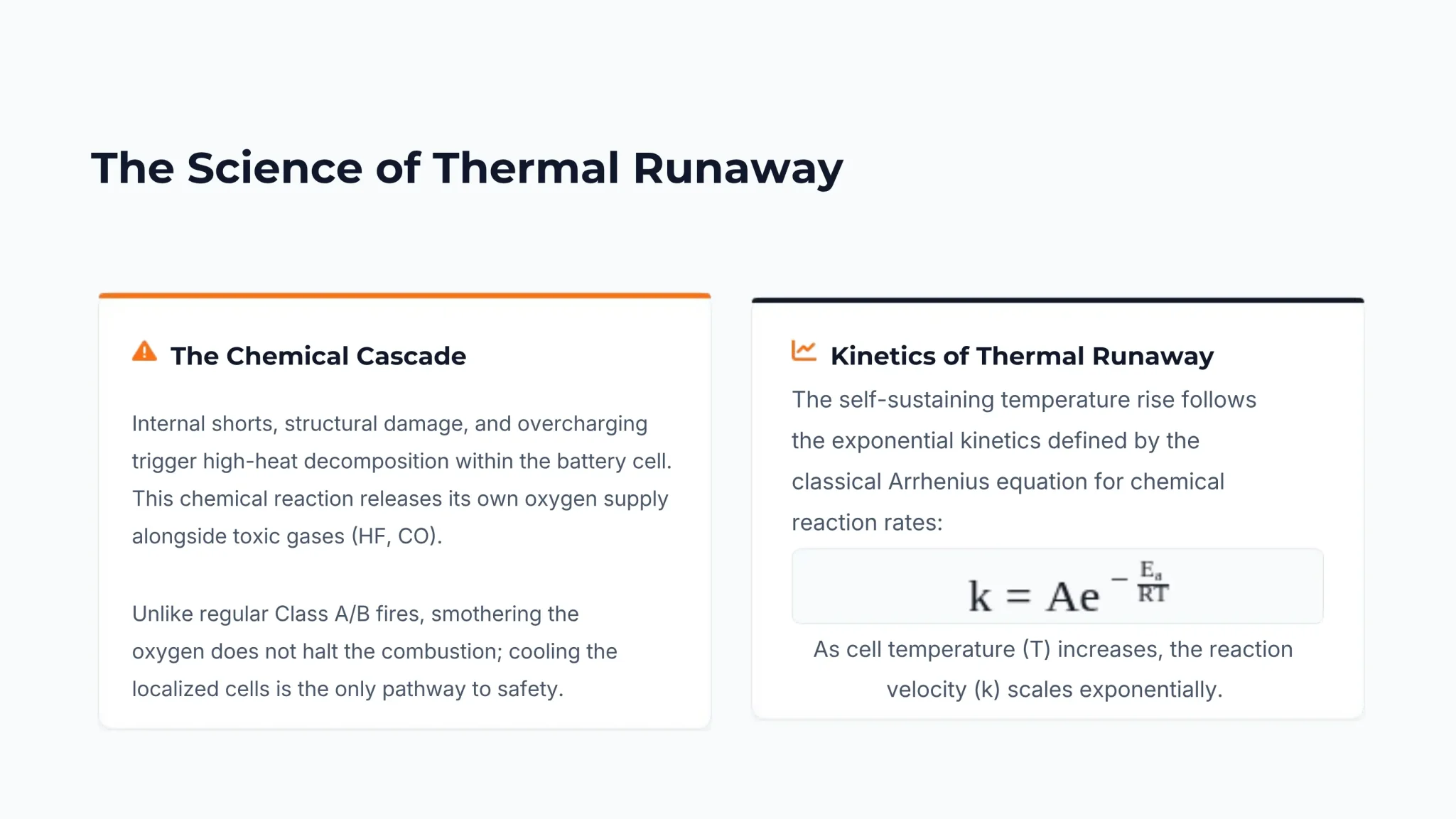
The primary mechanism behind battery hazards is a phenomenon known as thermal runaway. This process occurs when an internal short circuit, mechanical damage, overcharging, or exposure to external heat causes an uncontrolled rise in temperature within a battery cell. The excessive heat triggers exothermic chemical reactions, which generate more heat, traveling rapidly to adjacent cells.
Unlike standard Class A or Class B hazards, a lithium-ion battery fire generates its own oxygen supply while burning. It also releases heavy plumes of toxic, flammable gases, including carbon monoxide, hydrogen cyanide, and hydrofluoric acid. Standard commercial sprinkler systems are designed to control structural fires but are often incapable of penetrating a battery pack casing to cool the internal thermal reaction. Consequently, localized commercial battery fire protection demands specialized hardware that treats the chemical source rather than just the surrounding environment.
Tailored Fire Safety Solutions Across Different Facilities
The risk profile shifts significantly depending on the layout and operational purpose of your building. Facility managers across Houston, Austin, Dallas, Corpus Christi, College Station, and Victoria, TX must account for these institutional differences to maintain safety and compliance under evolving Texas building codes and Texas Fire Safety Compliance Standards.
1. Industrial Warehouses and Logistics Hubs
Modern industrial warehouses and distribution hubs heavily depend on high-capacity lithium-ion technology to drive continuous material handling operations. These environments centralize extreme fire risks through dense array storage of bulk lithium batteries, dedicated staging areas for automated guided vehicles (AGVs), and multi-port rapid charging stations for electric forklift fleets. Because battery charging occurs at high current loads over extended shifts, thermal stress on connectors, internal cell degradation, and localized overheating represent constant threats. In vast high-ceiling facilities, standard heat detectors or elevated sprinkler heads may experience thermal lag, delaying system activation until a thermal runaway event has already cascaded across adjacent racking systems.
Key Areas of Risk in Warehouses & Logistics Hubs:
-
High-Density Rack Storage: Cascading thermal runaway propagation through tightly packed palletized inventory.
-
Heavy-Duty Fast Charging Infrastructure: Overheating electrical connections, unbalanced power loads, and unmonitored battery charging zones.
-
Mechanical & Impact Damage: Forklift punctures or physical drops compromising internal cell separators.
-
High-Ceiling Detection Delays: Thermal plume dilution slowing conventional ceiling-mounted heat and smoke detector triggers.
To mitigate these specialized hazards, logistics facilities require isolated, fire-rated charging enclosures combined with localized thermal monitoring that automatically isolates power upon detecting abnormal temperature spikes. Storage arrays should be designed in strict compliance with NFPA 855 (Standard for the Installation of Stationary Energy Storage Systems). Paired with early-warning off-gas detection and engineered Fire Suppression Systems, warehouse managers can stop chemical fires at the cell level before thermal runaway compromises the broader facility footprint.
2. Educational Institutions and Schools
Educational institutions face a rapidly evolving fire safety landscape driven by 1:1 student device initiatives, centralized laptop and tablet storage, and extensive instructional technology. Classrooms, libraries, and IT storage rooms frequently house dense multi-device mobile charging carts where dozens of lithium-ion units recharge simultaneously. Unlike controlled industrial environments, school devices endure frequent physical impacts, improper handling, and wear from daily student use, drastically increasing the likelihood of micro-internal shorts. When combined with tight classroom storage spaces and high occupancy densities, an isolated battery failure can quickly escalate into an acute life safety crisis.
Key Areas of Risk in Educational Institutions:
-
Overnight Charging Carts: Unattended multi-device charging carts generating cumulative thermal buildup in enclosed rooms.
-
Physical Device Degradation: Compromised battery packs resulting from repeated drops, structural bending, or liquid exposure.
-
Toxic Off-Gas Exposure: High concentration of hydrofluoric acid and toxic fumes accumulating in high-density student spaces.
-
Egress Route Obstruction: Charging stations situated along primary egress corridors or near emergency exit doorways.
Protecting staff and students requires integrating localized battery safety protocols with advanced commercial building network capabilities. Early-warning detection systems designed to sense early battery off-gassing provide vital minutes to initiate orderly evacuations before visible smoke fills hallways. Furthermore, pairing early life safety warnings with automated emergency notification systems—including compliance solutions under Alyssa’s Law for Texas Schools—ensures rapid multi-agency emergency dispatch during life safety events.
3. Commercial Facilities and Office Buildings
In corporate office environments, high-density residential towers, and commercial workspace developments, lithium-ion fire threats are primarily concentrated in Uninterruptible Power Supply (UPS) equipment rooms, server closets, and decentralized employee workstation charging areas. Critical infrastructure relies heavily on lithium-backed UPS units to maintain uninterrupted server uptime during power grid disruptions. However, if a cell failure occurs within a tightly packed server cabinet or backup rack, the surrounding thermal energy can destroy vital digital infrastructure and vent toxic, flammable gases directly into centralized HVAC distribution systems, compromising air quality across multiple floors.
Key Areas of Risk in Commercial & Office Facilities:
-
UPS Battery Backup Banks: High-voltage energy storage banks in server rooms subject to thermal cascade.
-
HVAC Gas Propagation: Rapid migration of toxic battery off-gasses into building-wide ventilation networks.
-
Unregulated Personal Devices: Non-compliant, third-party e-bike, scooter, or personal electronic chargers plugged into general office outlets.
-
Server Room Water Damage Vulnerability: Irreparable water damage to sensitive data assets caused by traditional water sprinkler activation during minor localized electrical fires.
A comprehensive office protection strategy balances continuous electrical monitoring with localized clean agent suppression systems. Installing gaseous clean agent suppression like FM200 Fire Suppression Systems allows commercial facilities to suppress localized electrical and chemical battery fires without discharging water onto valuable microelectronics. Additionally, equipping high-risk areas with dedicated lithium battery fire extinguishers and scheduling routine professional maintenance through certified Fire Extinguisher Services ensures on-site teams are prepared to handle minor device incidents safely.
Lithium-ion battery fires are uniquely challenging because they produce their own source of oxygen, can re-ignite hours or days after being suppressed, and release toxic, explosive gases during a failure event.National Fire Protection Association (NFPA)
Advanced Lithium Battery Fire Suppression Technologies
When implementing robust protection, facility owners must look beyond standard water sprinklers. True protection requires an integrated approach utilizing targeted detection and customized suppression chemical agents.
One of the most innovative advancements in localized asset protection is the FCL-X fire extinguisher. This technology is engineered specifically to tackle the chemical realities of lithium failures. The agent works by forming a dynamic thermal barrier around the affected cells, cooling the core temperature and cutting off the chemical chain reaction. Deploying a specialized lithium battery fire extinguisher alongside your standard CO₂ fire extinguisher inventory gives your on-site teams the precise tools required to halt a small device fire before it develops into a structural disaster.
For larger localized installations, such as grid-scale energy storage systems or dense server rooms, an automated clean agent or specialized water-mist lithium battery fire suppression system is recommended. These setups monitor for off-gassing particles before visible smoke or flames appear, providing a critical window for automated intervention.
Developing a Compliance and Prevention Framework
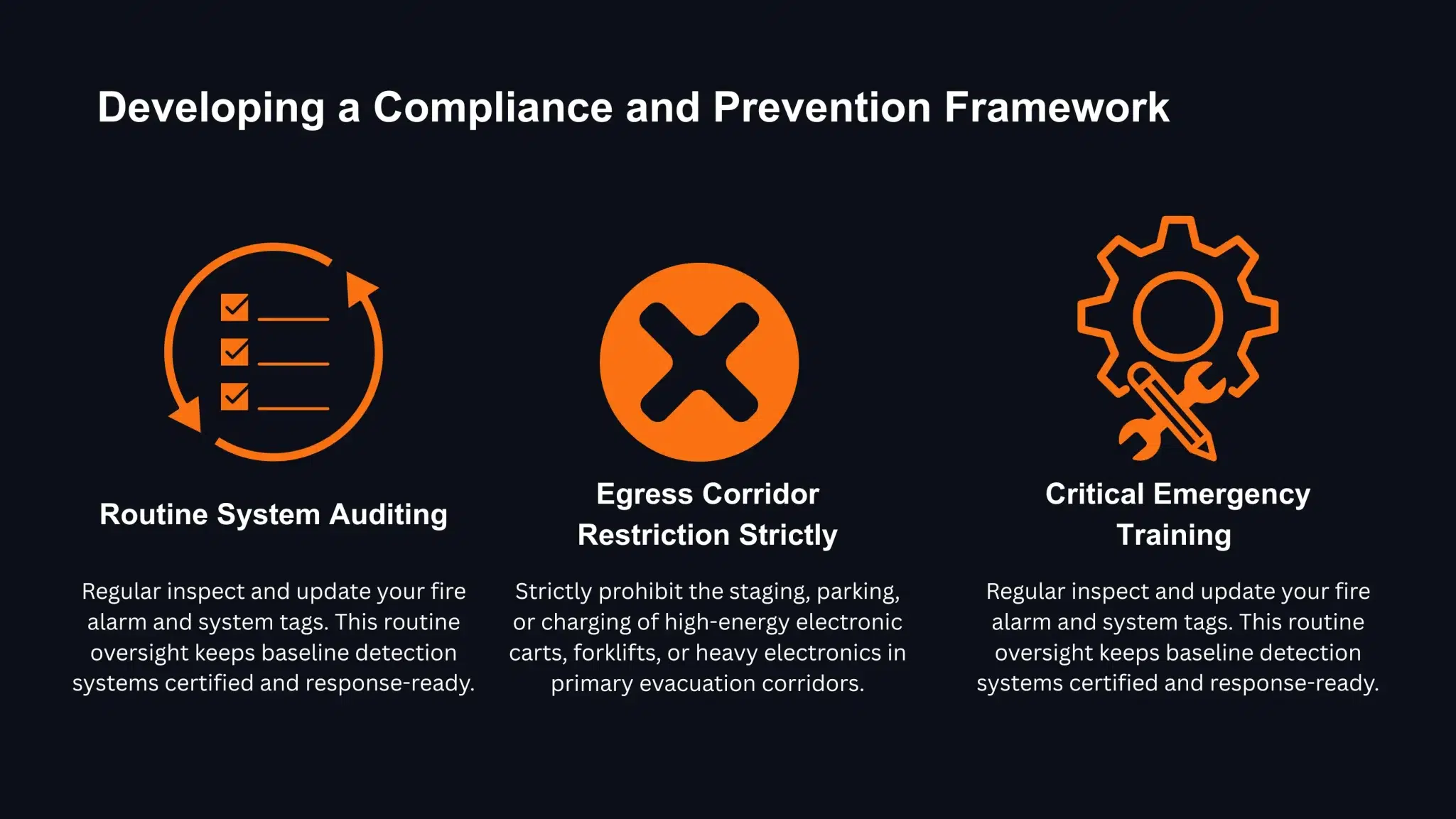
Mitigating these risks requires adherence to evolving safety standards, including NFPA 855 (Standard for the Installation of Stationary Energy Storage Systems) and localized Texas building amendments. Every commercial facility should execute a multi-tier prevention protocol:
- Routine System Inspections: Ensure your life safety infrastructure is verified by certified professionals to maintain operational compliance.
- Dedicated Charging Infrastructure: Never permit charging on combustible surfaces or near primary exit corridors.
- Staff Emergency Training: Educate team members on how to identify the distinct odor and venting behavior of a failing battery pack.
Protecting your personnel, inventory, and real estate from complex chemical hazards requires an experienced fire protection partner. FireTron delivers end-to-end design, installation, testing, and compliance maintenance across Texas.
Critical Safety Statistic: According to data tracked by UL Solutions, thermal runaway events can elevate battery cell temperatures to over 1,000°C (1,832°F) within seconds, emphasizing the critical window for specialized suppression tools.