Commercial Fire Alarm Systems: What Building Owners Should Know Before Installation
Installing a commercial fire alarm system is one of the most critical life safety investments a commercial building owner, property manager, or real estate developer can make. A fully integrated system not only safeguards occupants and minimizes structural damage during an emergency, but it also ensures strict adherence to local Texas building codes and national fire safety regulations. Proper planning prior to system selection and installation helps avoid costly post-inspection modifications, scheduling delays, and operational downtime.
When selecting a qualified fire system inspection tags provider to design and integrate your setup, facility decision-makers must evaluate several technical, regulatory, and financial factors. From code compliance to long-term routine maintenance, knowing what to expect prior to installation streamlines the entire project timeline while maximizing site security.
Understanding Commercial Fire Alarm System Components and Architecture
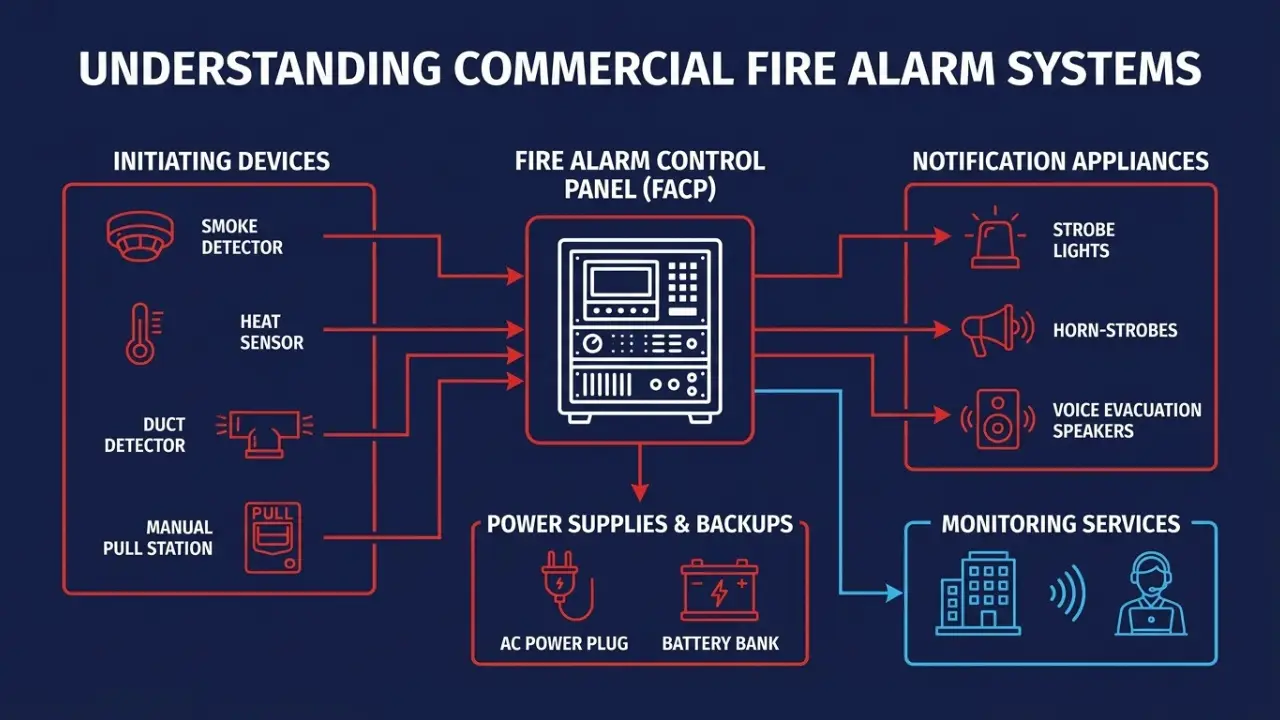
A modern commercial fire alarm system relies on an interconnected network of specialized devices designed to detect environmental indicators of fire, alert occupants, and notify emergency responders automatically. Understanding how these core components operate together allows property managers to choose the best configuration for their facility layout.
- Fire Alarm Control Panel (FACP): The central processing brain of the system that monitors inputs, controls outputs, drives notification appliances, and relays alarm signals to monitoring services.
- Initiating Devices: Hardware responsible for sensing fire conditions, including photoelectric smoke detectors, rate-of-rise heat sensors, duct detectors, and manual pull stations.
- Notification Appliances: Visual and audible alerts—such as strobe lights, horn-strobes, and voice evacuation speakers—that direct occupants to evacuate safely.
- Power Supplies and Backups: Primary electrical feeds backed up by dedicated battery banks or secondary generator power to ensure continuous protection during power outages.
Depending on facility requirements, systems are categorized as conventional or addressable. Addressable fire alarm systems pinpoints the exact location of triggered sensors, making them ideal for multi-story office buildings, industrial complexes, and large commercial centers.
Key Regulations and Texas Building Codes for Commercial Fire Alarm Systems
Every commercial fire alarm system installation across Texas must strictly conform to local municipal codes, state licensing rules, and established guidelines set by the National Fire Protection Association (NFPA). Specifically, NFPA 72 (National Fire Alarm and Signaling Code) dictates the design, testing, location, and maintenance of alarm systems, while NFPA 101 (Life Safety Code) establishes occupancy-based protection criteria.
In Texas, fire safety enforcement falls under local Authorities Having Jurisdiction (AHJs) alongside the Texas State Fire Marshal’s Office. Navigating these regional requirements demands an experienced fire alarm company that understands municipal variances across major Texas markets.
“Proper design, installation, and regular testing of commercial fire detection and alarm systems are essential to ensuring early warning and safe evacuation during a fire emergency.”— National Fire Protection Association (NFPA)
Failing to satisfy code requirements during the design phase can lead to rejected municipal permits, failed final inspections, or delayed building occupancy certificates. Partnering with a licensed life safety contractor ensures that engineering plans, device spacing, and emergency communication capabilities satisfy all regulatory standards from day one.
Steps in the Fire Alarm System Installation Process
Executing a successful installation involves multiple structured stages to guarantee system functionality and full code compliance. Property owners should anticipate the following sequence during project deployment:
- Site Assessment and Engineering Design: Professional engineers evaluate building floor plans, ceiling heights, occupancy classifications, and environmental factors to draft custom system schematics.
- Permitting and Plan Submission: Architectural plans and wiring diagrams are submitted to local Texas building departments and fire marshals for plan review and permit approval.
- Physical Cabling and Device Installation: Licensed technicians run code-compliant, fire-rated wiring, mount backboxes, install initiating and notification devices, and connect the main control panel.
- System Programming and Pre-Testing: Technicians program system addressability, cause-and-effect matrix logic, and execute preliminary end-to-end operational tests.
- AHJ Inspection and Acceptance Testing: The local fire marshal conducts an on-site acceptance test to confirm full functionality, emergency power transfer, and audible/visual coverage prior to signing off.
Working with an established life safety partner like FireTron’s fire alarm systems Texas team guarantees that every phase, from initial blueprinting to official fire marshal acceptance—is managed with expert precision.
Integrating Fire Alarms with Comprehensive Life Safety Systems
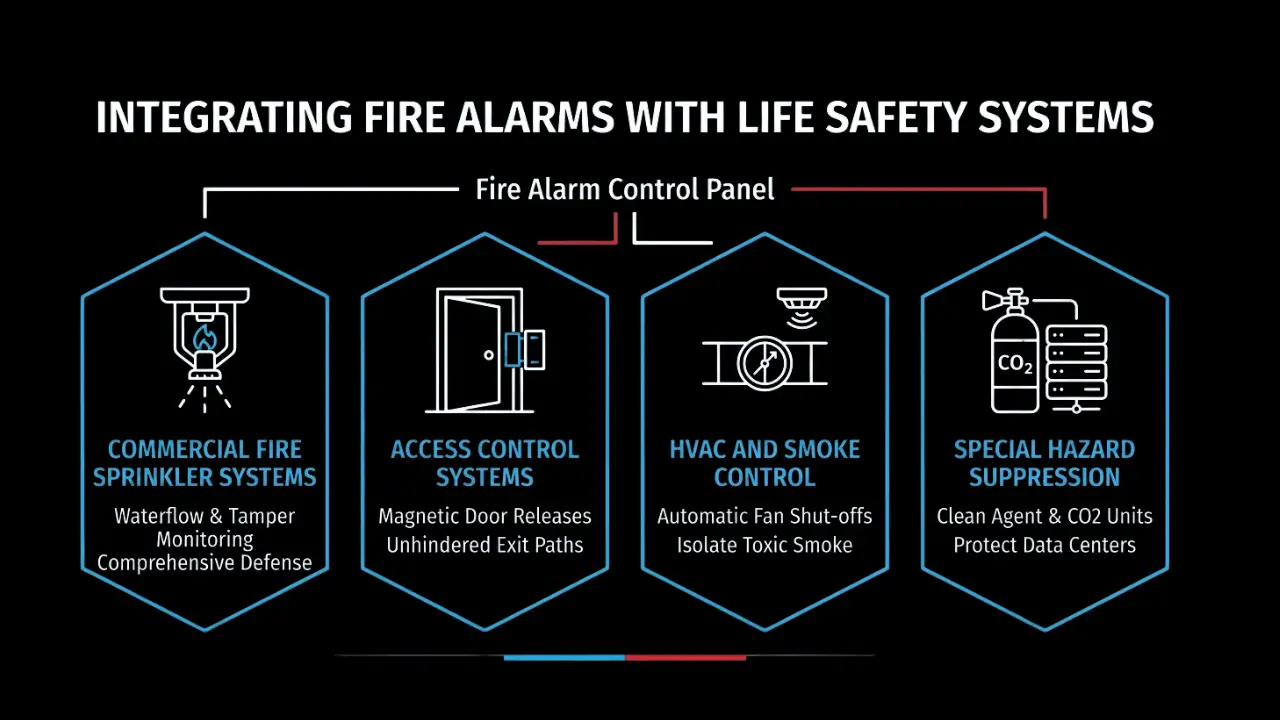
Modern commercial fire protection rarely operates in isolation. Advanced commercial fire alarm systems frequently integrate directly with other building security, environmental, and life safety infrastructure to automate building safety responses during an emergency.
- Commercial Fire Sprinkler Systems: Waterflow switches and tamper valves connect to the main panel to instantly signal water flow or valve closure. Learn more about professional commercial fire sprinkler installation options for comprehensive property defense.
- Access Control Systems: Fire panels trigger automated magnetic door releases upon alarm initiation, ensuring unhindered exit paths for evacuating staff and clear access for firefighters.
- HVAC and Smoke Control: Duct detectors trigger automatic shut-offs for ventilation fans or activate dedicated smoke evacuation dampers to isolate toxic smoke.
- Special Hazard Suppression: Clean agent and CO2 suppression units interface directly with fire panels in high-value spaces like data centers or server rooms. Facility managers can review dedicated solutions through our commercial fire suppression system services.
Frequently Asked Questions About Commercial Fire Alarm Systems
How much does a commercial fire alarm system installation cost?
Costs vary widely depending on building square footage, system complexity, structural layout, and whether the installation is net-new construction or a retrofit. On average, commercial system installations range from $1.50 to $5.00+ per square foot. Retrofitting existing structures typically requires additional labor and fire-rated cabling compared to new construction.
How often do commercial fire alarm systems require inspection?
Per NFPA 72 guidelines and Texas state regulations, commercial fire alarm systems must undergo comprehensive annual inspections by licensed fire protection professionals. Additionally, visual inspections and functional testing of specific system components may be required on a quarterly or semi-annual basis.
What is the typical lifespan of a commercial fire alarm control panel?
Most commercial fire alarm panels and field devices have an operational lifespan of 10 to 15 years. Beyond this timeframe, replacement parts become scarce, technology becomes obsolete, and system reliability can decrease, necessitating a panel upgrade or complete system modernization.
Choosing the Right Fire Alarm Company for Your Texas Facility
Selecting the right commercial partner for your facility goes far beyond hardware selection. Building owners need a reliable fire protection partner capable of providing complete turnkey services—including turnkey installation, 24/7 monitoring, emergency repairs, and routine compliance testing.
When evaluating local contractors, ensure they hold active licenses with the Texas State Fire Marshal, employ NICET-certified engineers and technicians, and offer deep regional expertise across major Texas markets. A trustworthy contractor maintains strong relationships with municipal fire officials, ensuring efficient project approvals and hassle-free acceptance testing.
Whether you manage a single office building or a multi-city real estate portfolio, partnering with FireTron provides peace of mind through expert engineering, certified installation, and dedicated compliance support across Texas.