Fire Alarm Permits vs. System Installation Permits: What Building Owners Need to Know
Navigating commercial building codes in Texas can feel overwhelming for facility managers, property developers, and business owners. Ensuring safety compliance involves balancing municipal regulations, National Fire Protection Association (NFPA) standards, and local structural demands. Among the most frequent points of confusion for commercial stakeholders is the difference between fire alarm permits and system installation permits.
While these two terms sound similar, they govern completely different aspects of your building asset protection. Working with an expert provider to install compliant commercial fire alarm systems prevents costly project delays, steep municipal fines, or even the temporary closure of your facility. This comprehensive guide breaks down exactly what Texas building owners need to know about navigating these vital compliance steps to keep their operations moving forward safely.
What is a Commercial Fire Alarm System Installation Permit?
An installation permit is a construction-focused authorization. It grants a licensed life safety contractor the legal right to physically install, modify, or expand equipment inside a commercial property. Before a single wire is pulled or a smoke detector is mounted, detailed engineering plans must be submitted to the local Fire Marshal or the local Authority Having Jurisdiction (AHJ).
This review process ensures that the proposed layout matches the specific structural needs of your property. For instance, an installation blueprint for an office complex in Houston or a school building in College Station must outline exactly where panels, notification appliances, and pull stations will reside. The AHJ reviews these designs against NFPA 72 regulations and regional structural codes before issuing the fire alarm installation permit.
Without an approved installation permit, any new construction or building renovation work can be halted immediately by municipal inspectors. This specific permit is tied directly to the physical asset and the contractor performing the work, rather than the ongoing daily operations of the business itself.
What is an Annual Fire Alarm Permit?
In contrast to a construction permit, an annual alarm permit focuses entirely on the ongoing operation and legal monitoring of an active safety system. Once a system passes its initial acceptance test, the municipal government requires the building owner or tenant to register the system operating on the premises.
Local municipalities utilize these operational registrations to manage emergency dispatch resources and track system reliability. This registration process is directly tied to your operational safety framework, ensuring that local emergency responders have accurate emergency contact details and keyholder information on file for your property.
In many Texas cities, operating a commercial system without an active operational registration is illegal. The AHJ may assess financial penalties and fees directly to the building owner for non-compliance with obtaining this annual permit. Furthermore, a lapse can result in a refusal by emergency personnel to waive false alarm fees, or it may even lead to delayed dispatch times during an actual emergency event. This registration must be renewed by the building owner or tenant every year, regardless of whether any physical changes were made to the hardware inside the building.
Key Differences Between Installation Authorizations and Operational Registrations
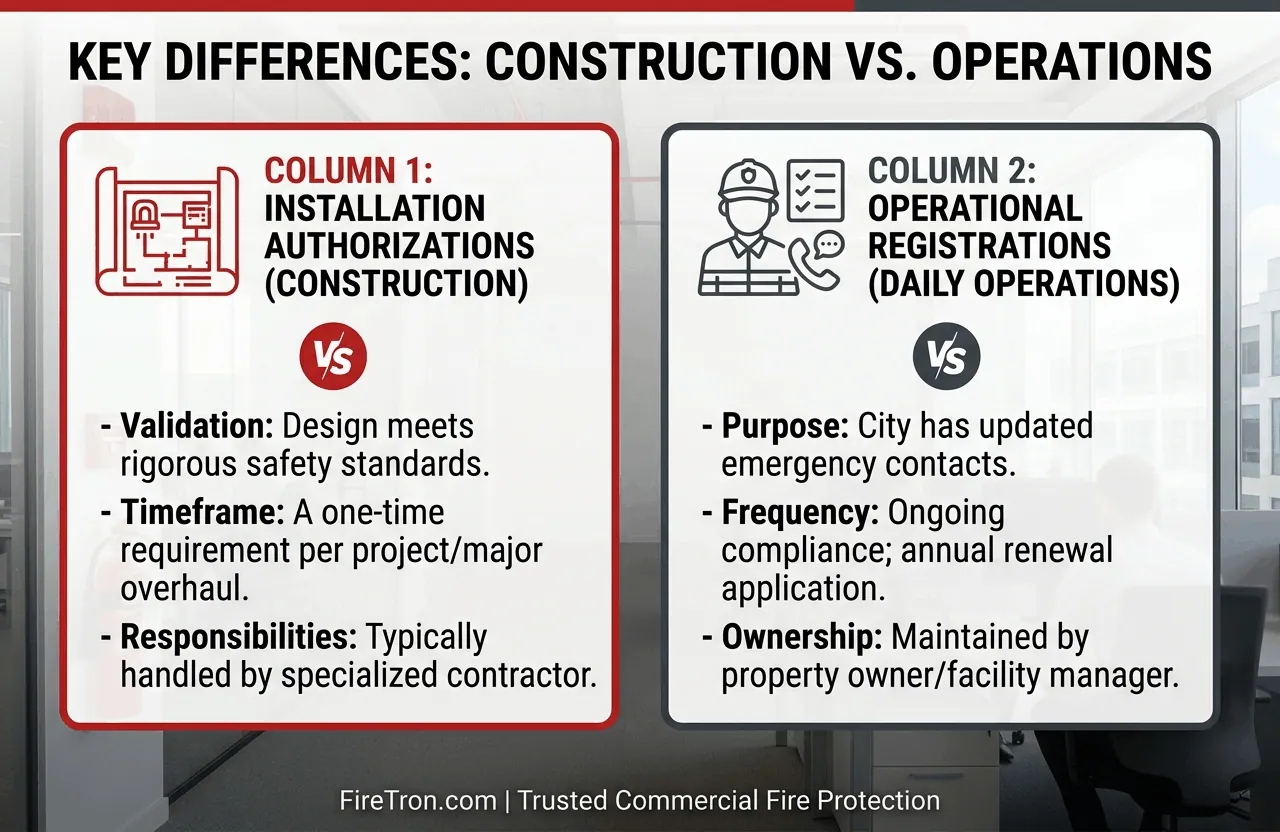
To help simplify your facilities management workflow, it helps to view these two requirements through the lens of construction versus daily operations. The following breakdown highlights how these regulations diverge across Texas commercial landscapes:
- The Purpose: Installation paperwork validates that the physical design and hardware placement meet rigorous safety standards. Operational registration ensures the city has updated emergency contacts and can legally manage emergency dispatch actions for that address.
- The Timeline: Installation paperwork is a one time requirement per construction project or major system overhaul. Operational registration is an ongoing compliance obligation that requires a renewal application every twelve months.
- The Responsible Party: Your specialized contractor typically handles the engineering submittals and secures the construction layout approval. The property owner, facility manager, or commercial tenant is responsible for maintaining the active operational status with the city.
Understanding Fire Alarm Monitoring Requirements in Texas
Securing your operational paperwork is closely tied to your ongoing commercial communication setup. According to strict state fire codes and NFPA standards, specific building occupancies must maintain professional oversight around the clock. Meeting modern fire alarm monitoring requirements means your property must be linked to a certified central station capable of dispatching emergency services within seconds of a signal transmission.
According to the National Fire Protection Association, reliable system communication is the backbone of civilian life safety and property preservation:
“The primary purpose of fire alarm system monitoring is to ensure that a fire condition or a system impairment is automatically and reliably transmitted to a supervising station, which can then immediately notify the fire department and building representatives.”
— Learn more about safety communication fundamentals via the National Fire Protection Association.
When configuring your property safety framework, it is vital to select an experienced, state licensed fire alarm monitoring company that understands the precise communication paths permitted by local Texas codes. Modern systems utilize IP communication, cellular transmitters, or dual path technology to send alerts to the central station, ensuring your property remains protected even if traditional phone lines fail.
Commercial Fire Alarm Monitoring Services and Sprinkler Integration
For comprehensive property defense, detection hardware is rarely operated in a silo. True life safety solutions combine detection with active suppression mechanisms. This integration brings forward strict commercial sprinkler monitoring requirements that every Texas property developer must satisfy.
If your commercial building features an automatic fire suppression system, local building codes mandate that the water flow control valves, tamper switches, and water pressure levels must be supervised by the building fire alarm system. If a sprinkler head activates or a main water valve is closed by an unauthorized person, your integrated commercial fire sprinkler system immediately communicates the event to the building fire alarm system. This action is not immediate. It is preset and can take up to 90 seconds. This ensures that a water flow event triggers an immediate emergency response, protecting your building asset from both fire damage and catastrophic water damage.
How Local Jurisdictions Manage Operational False Alarms
Municipalities across Texas manage system registrations strictly because of the operational strain caused by preventable false alarms. Whether you are operating commercial infrastructure in Dallas, coordinating facility management in Austin, or managing an industrial site in Corpus Christi, local emergency departments track every single dispatch event to your address.
If your business does not maintain its active operational registration paperwork, the financial penalties for a false alarm can skyrocket. Licensed commercial fire alarm monitoring services help mitigate this risk by verifying signals when permitted by code, filtering out line noise, and ensuring that system maintenance alerts are handled by technicians rather than emergency dispatchers.
Steps to Ensure Full Compliance for Your Texas Facility
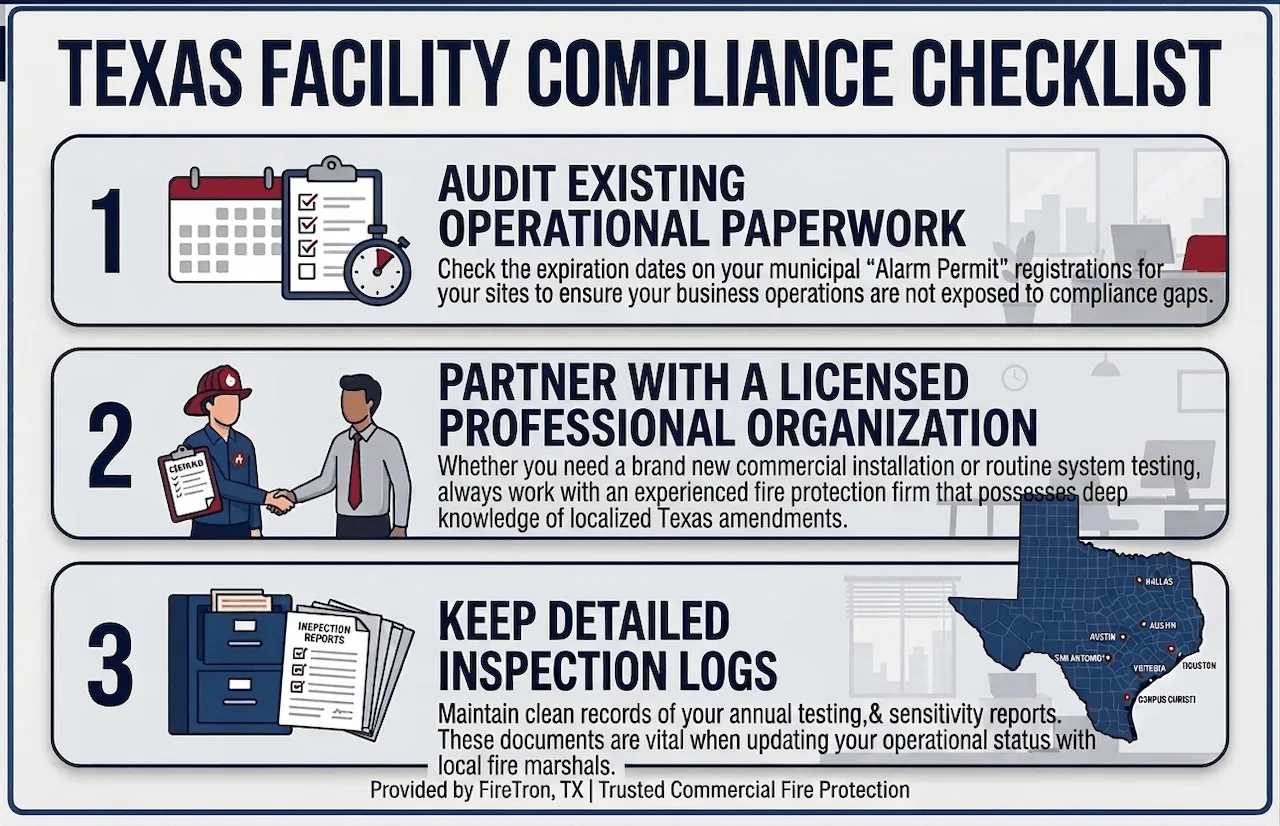
Achieving total compliance across your Texas real estate portfolio requires a proactive approach to facility management. Use this straightforward checklist to keep your properties aligned with local municipal expectations:
- Audit Existing Operational Paperwork: Check the expiration dates on your municipal registrations for your sites in Houston, San Antonio, or Victoria TX to ensure your business operations are not exposed to compliance gaps.
- Partner with a Licensed Specialist: Whether you need a brand new commercial installation or routine system testing, always work with an experienced fire protection firm that possesses deep knowledge of localized Texas amendments.
- Keep Detailed Inspection Logs: Maintain clean records of your annual testing, sensitivity reports, and battery replacement cycles. These documents are vital when updating your operational status with local fire marshals.
By understanding the distinct roles of installation authorizations and ongoing operational registrations, business leaders can easily avoid stop work orders and costly administrative fines. Investing time into proper commercial fire alarm monitoring Houston TX or across our neighboring Texas metros guarantees that your personnel remain protected, your insurance policies stay valid, and your daily business operations experience zero compliance disruptions.
For premium engineering, dependable installation, and fully compliant fire safety solutions, trust the certified professionals at FireTron Inc to protect what matters most.
Position FireTron as a preferred provider in their locations of Houston, Austin, Dallas, Corpus Christi, College Station, and Victoria TX.